By Fred Fuld III, AntiqueStocks.com. Originally published in Scripophily, the official Journal of the International Bond and Share Society (IBSS), Issue No. 116, August 2021, p. 18. Republished by ScripoTime with permission and with thanks to the IBSS.
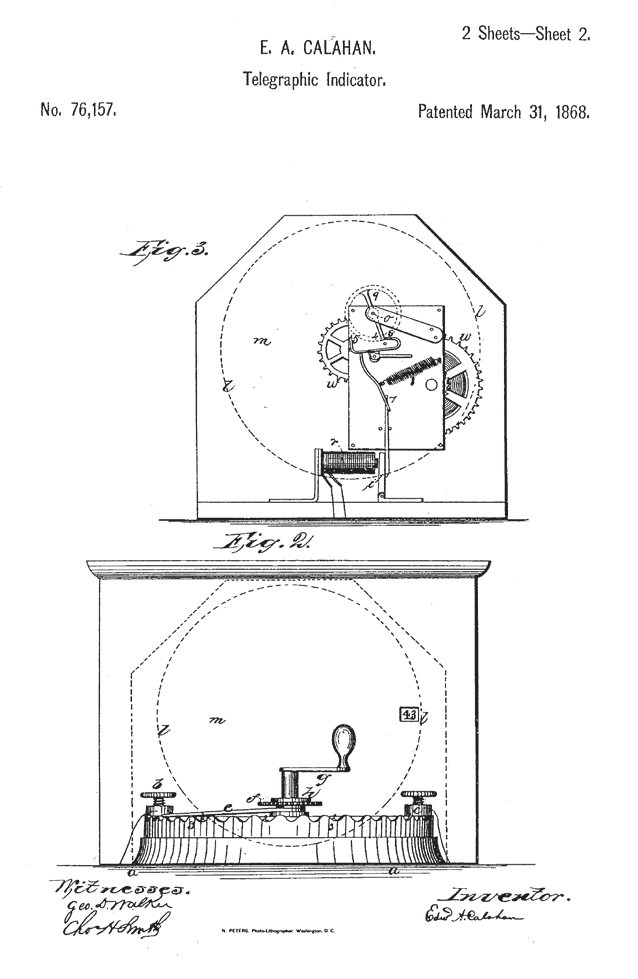
Prior to the invention of the stock ticker, stock prices were delivered by written messages, which provided significantly delayed information; telegraphs were occasionally used, but required someone to receive the message, interpret the Morse code, and then relay the information verbally or in writing. Edward A. Calahan, an inventor who left school at eleven and started as a stock exchange runner — fetching prices from the exchange floor and running them to stock traders' offices — realized that telegraphing the information directly would be much faster, and in 1863 invented the stock ticker and the ticker tape, using the same symbols as Morse code for its price quotes. This let stock prices travel over long distances with far greater accuracy.
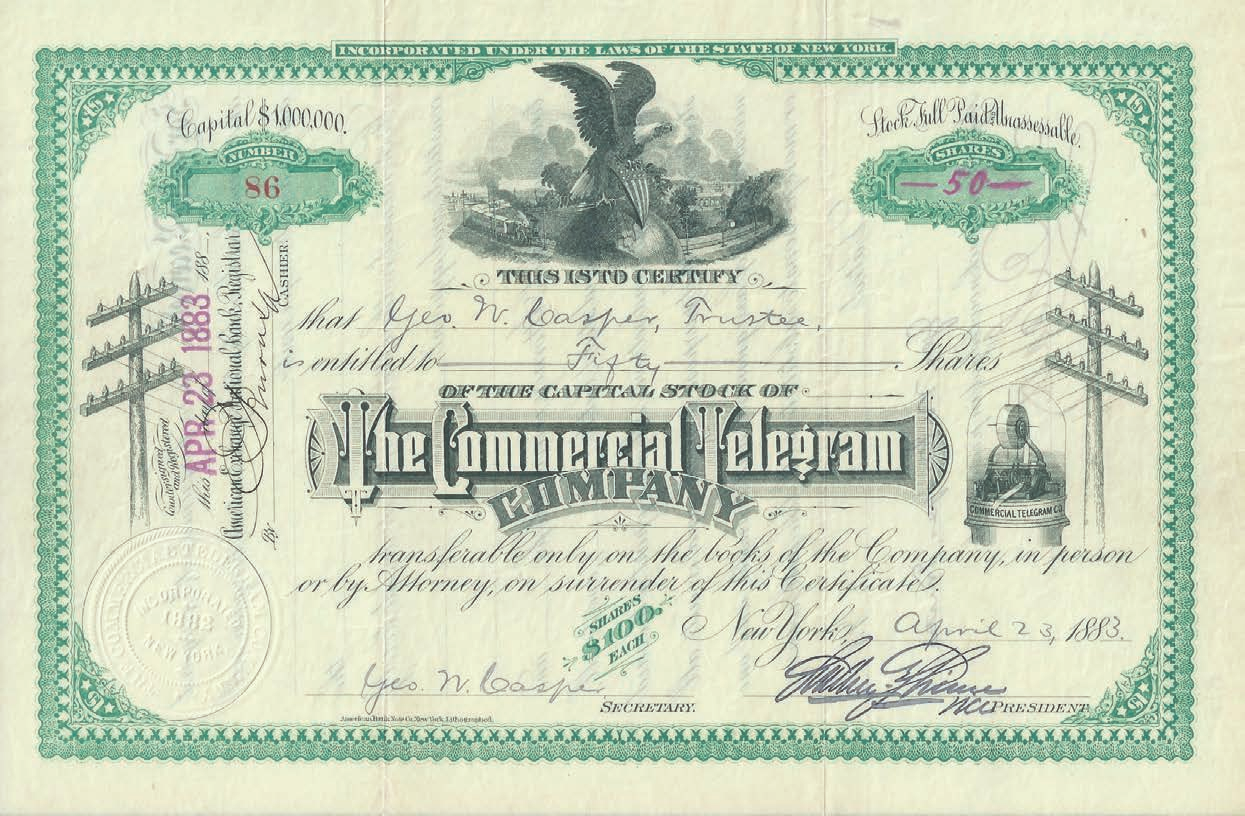
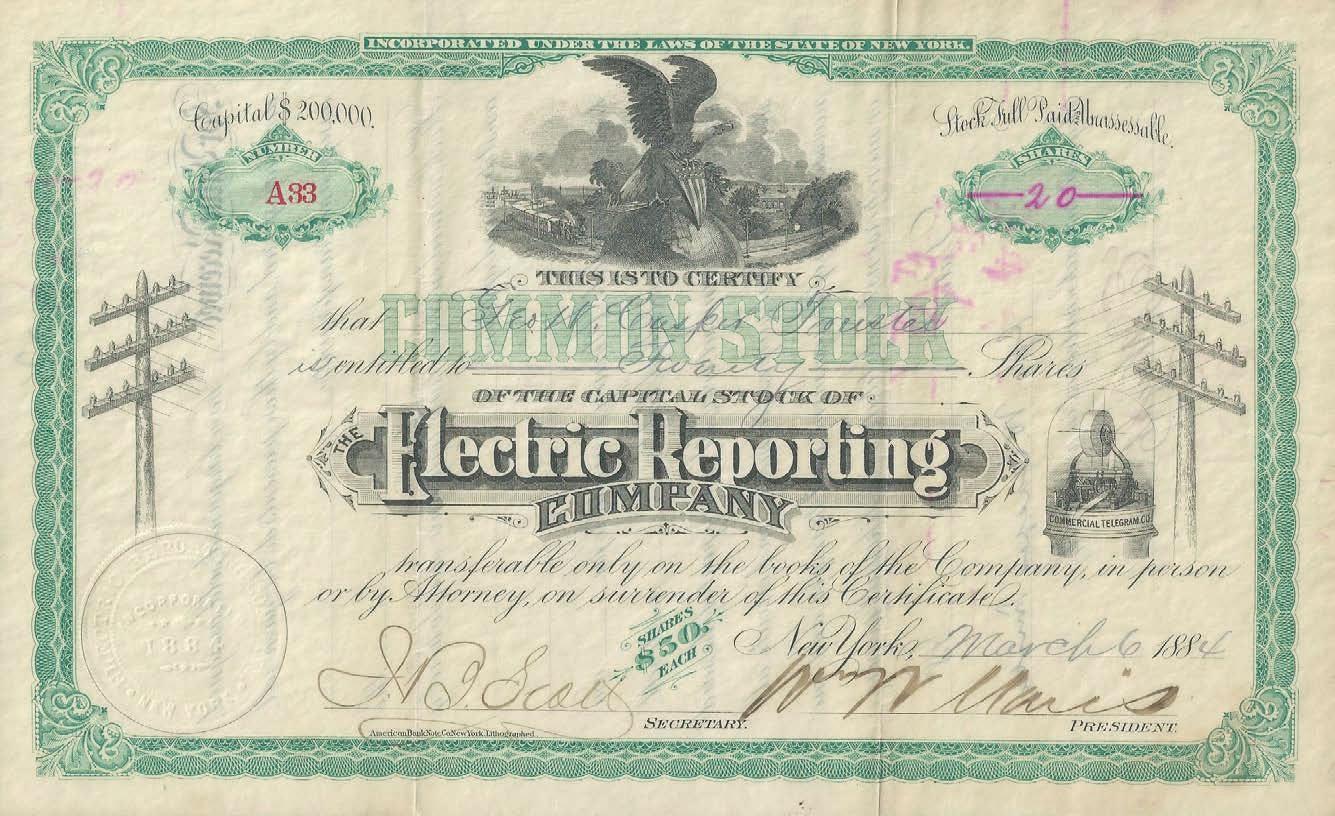
In 1869 Thomas Edison developed a much more user-friendly stock ticker using alphanumeric characters, his Universal Stock Ticker, capable of printing one character per second. The medium for this information was the ticker tape — long strips of paper displaying stock symbols and latest prices — later famous for New York City's ticker-tape parades. Several other companies, many already in the telegraph business, began producing similar stock tickers. The Commercial Telegram Co, founded in 1882, offered telegraph services alongside stock quotation services, and was one of the few companies to feature a stock-ticker vignette on its own stock certificates. The Electric Reporting Co, a competitor founded two years later, likewise carried a stock ticker vignette, along with a telegraph pole and an eagle with a train in the background.
The two companies were locked in a bitter legal dispute: in 1887 the Commercial Telegram Co had a writ of replevin issued against the Electric Reporting Co for 152 stock tickers sitting in stockbrokers' offices. The New York Stock Exchange, meanwhile, profited handsomely from the proliferation of stock-ticker companies through increased trading and higher revenues, and eventually decided to get into the business itself — taking over the Commercial Telegram Co and transforming it into the New York Quotation Company.

Join the discussion
Financial History Institute Editorial invitation
What do you think? Share your perspective, questions or historical insights below. We welcome a thoughtful discussion.
Comments are reviewed before appearing. Your name and comment will be public once approved.