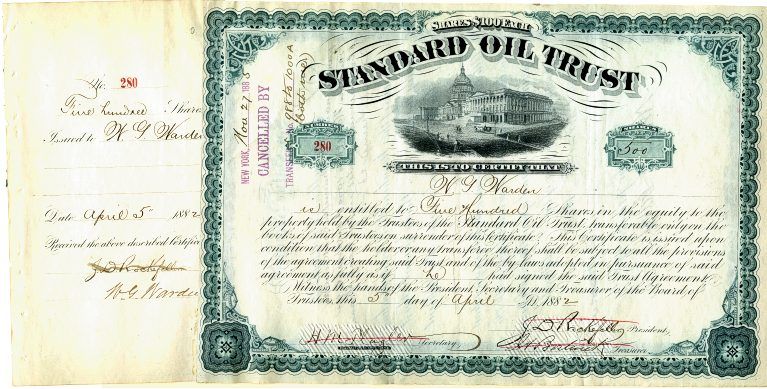
Standard Oil Company
1882 · United States
Rockefeller's company dominated American oil refining until the Supreme Court ordered its break up in 1911.
Collect
The original share certificates and bonds behind the stories you read on the Institute.
Scripophily is the collecting of historical share certificates and bonds. Each certificate is a primary source: a document that financed a railway, a canal or an empire, often beautifully engraved and signed by the people who built these companies. For students of financial history, there is no better way to hold the past in your hands.
1882 · United States
Rockefeller's company dominated American oil refining until the Supreme Court ordered its break up in 1911.
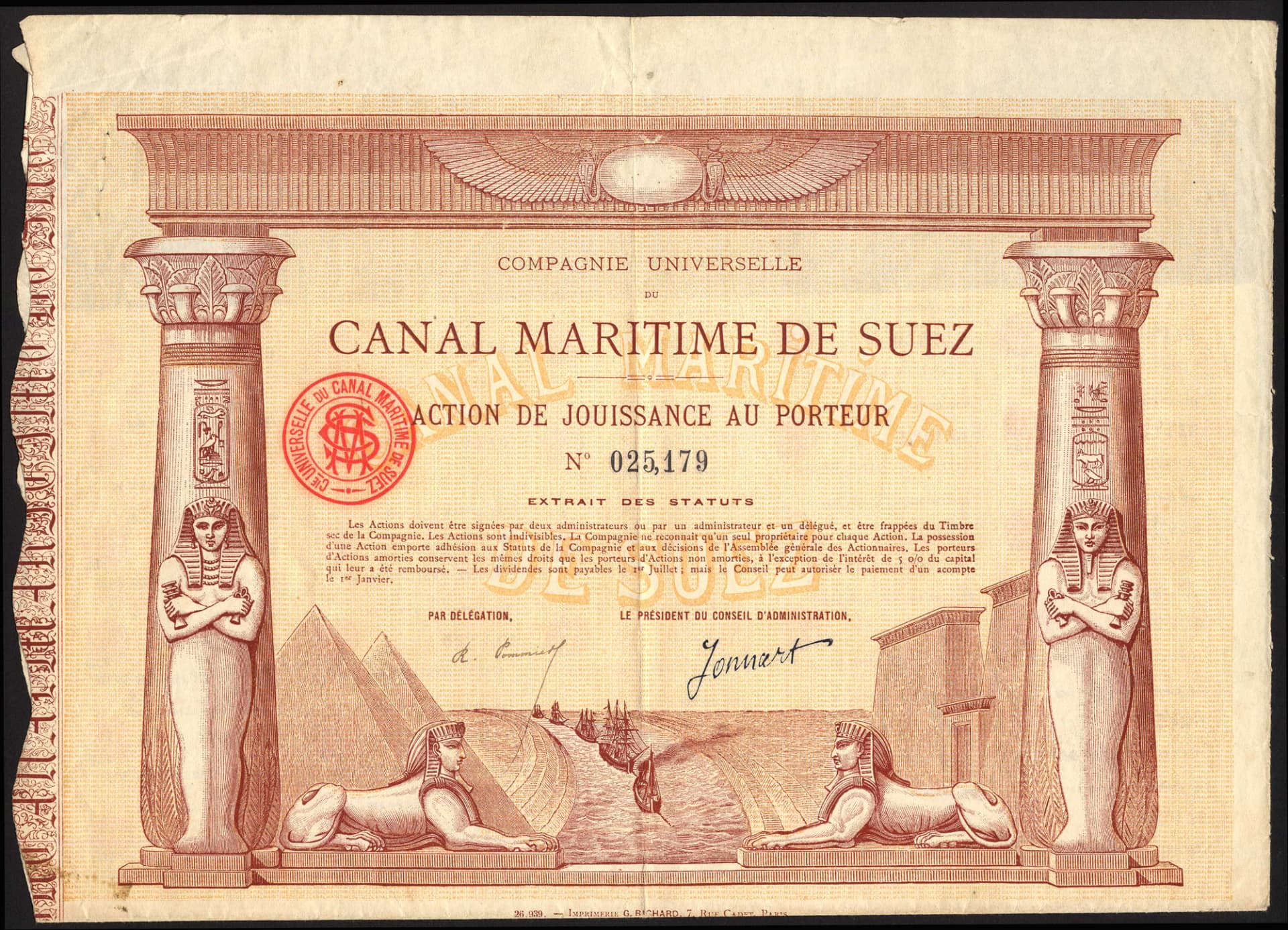
Compagnie Universelle du Canal Maritime de Suez · Egypt and France
Financed largely by French investors, the canal opened in 1869 and transformed global trade between Europe and Asia.
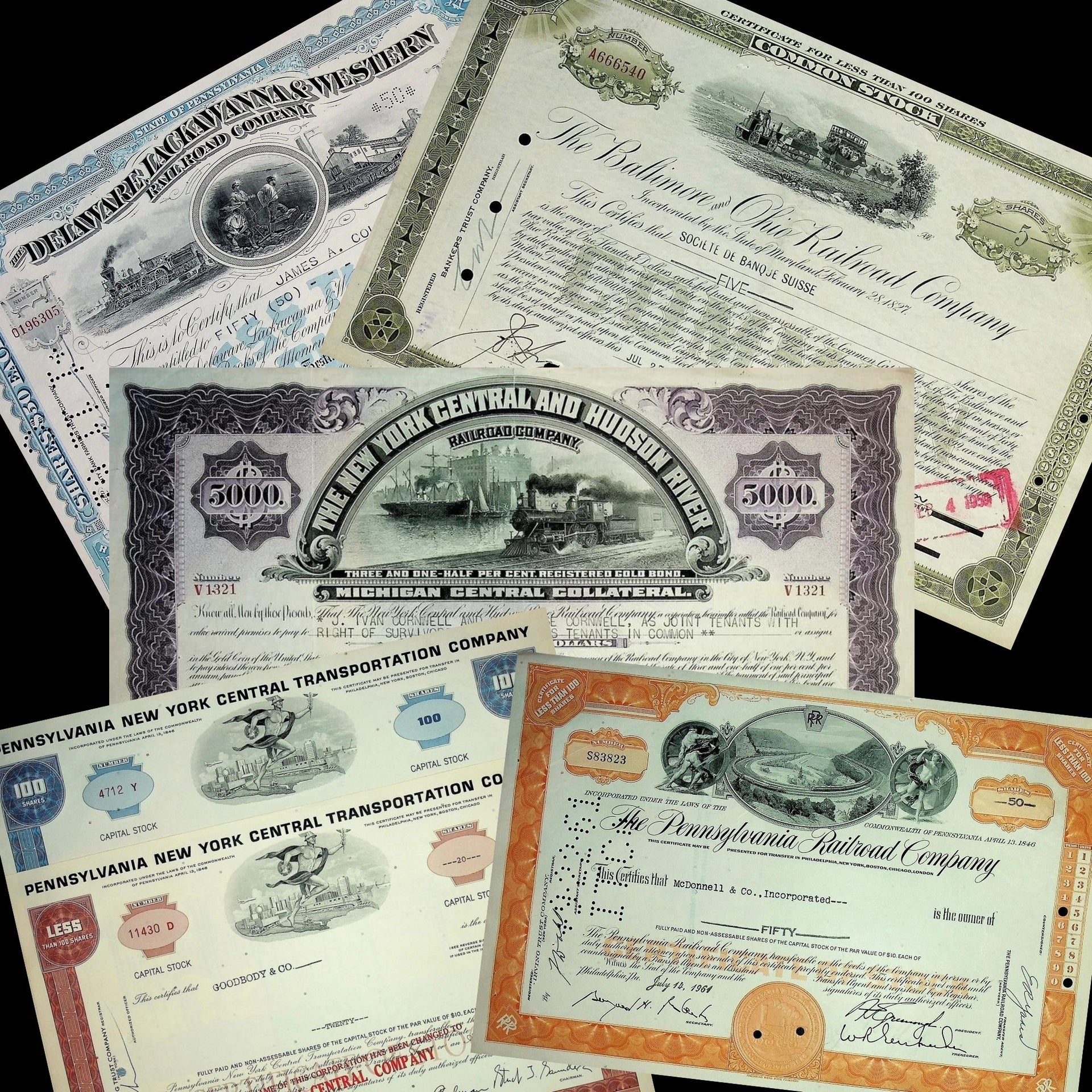
United States
Builder of the eastern half of the first Transcontinental Railroad, completed in 1869.
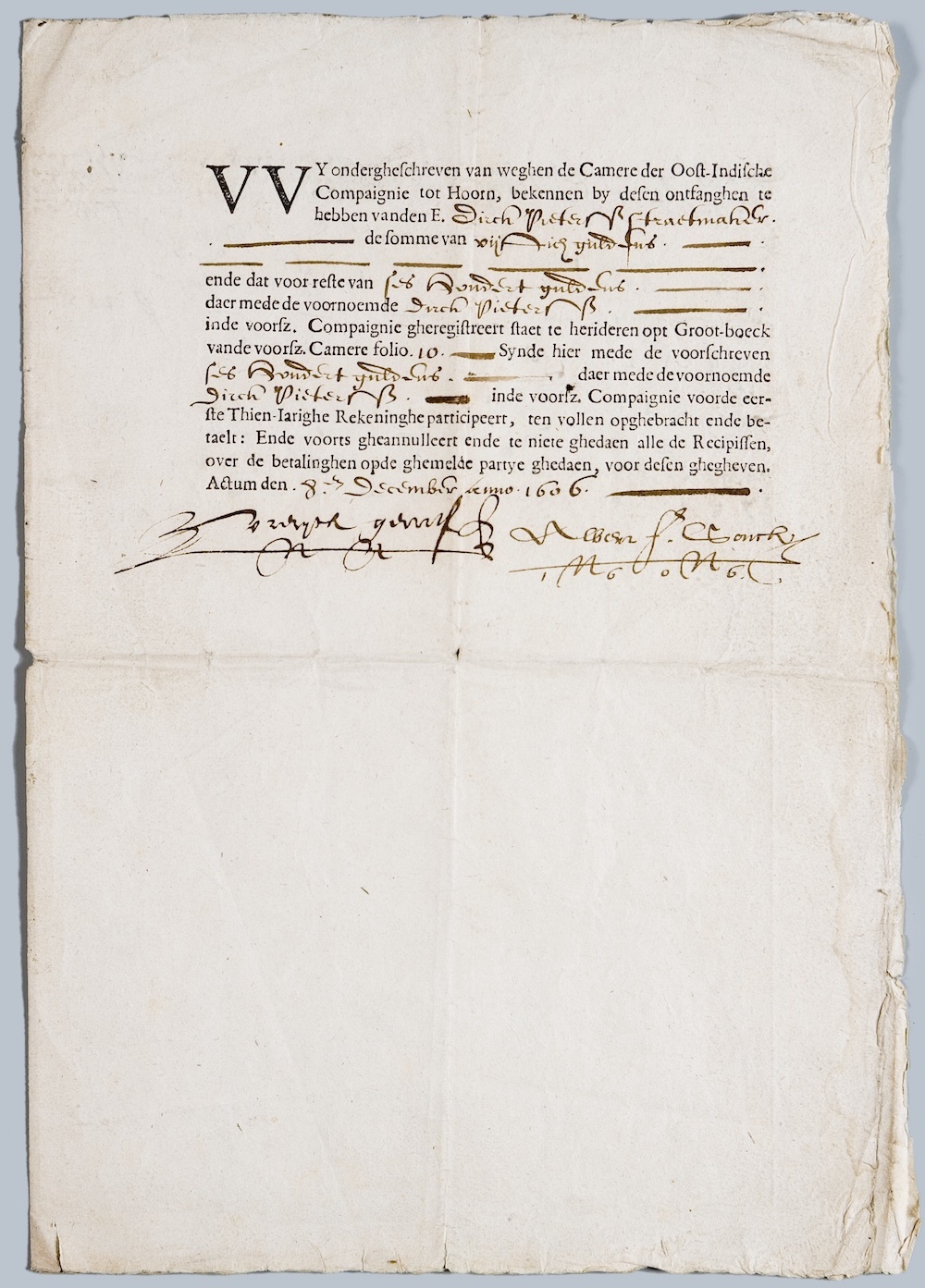
Vereenigde Oostindische Compagnie · 1606 · Netherlands
Founded in 1602, the first company whose shares traded continuously on a stock exchange.
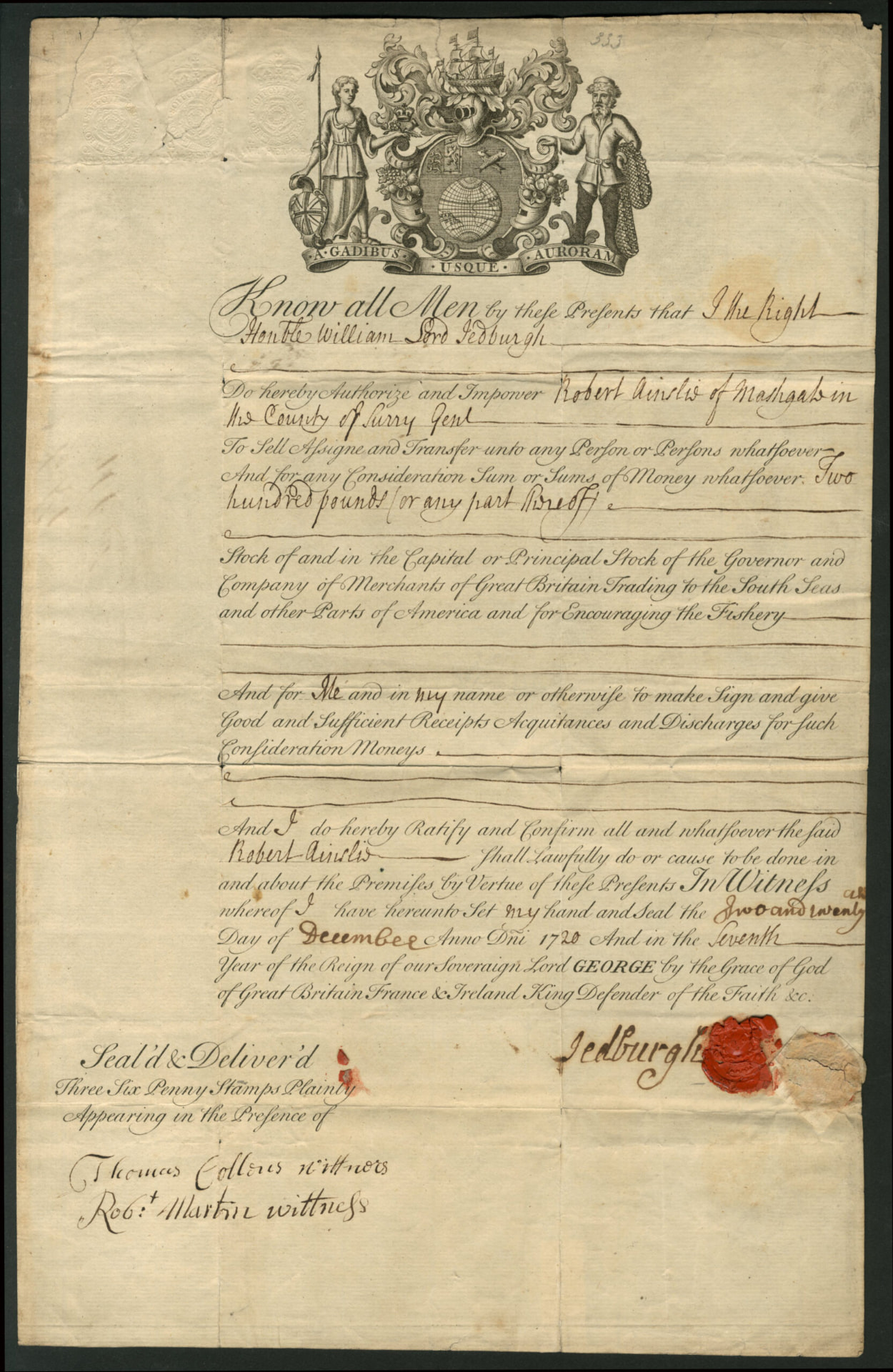
1720 · Great Britain
The company at the centre of the 1720 bubble, one of history's most famous speculative manias.
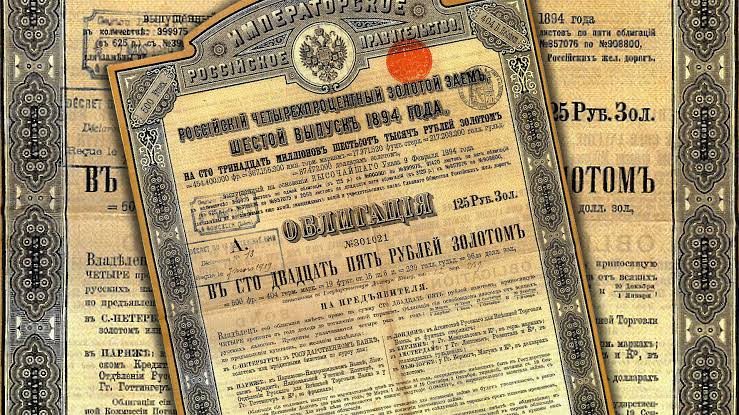
Imperial Russian Government · 1894 · Russia
Widely held by French savers before 1917, then repudiated by the Bolsheviks in one of the largest sovereign defaults in history.
Browse thousands of certificates from dealers and collectors around the world.
A closer look
Every old share tells you who issued it, where, when, for how much and on what terms. Take this Brazil Railway Company ordinary share of 1911.
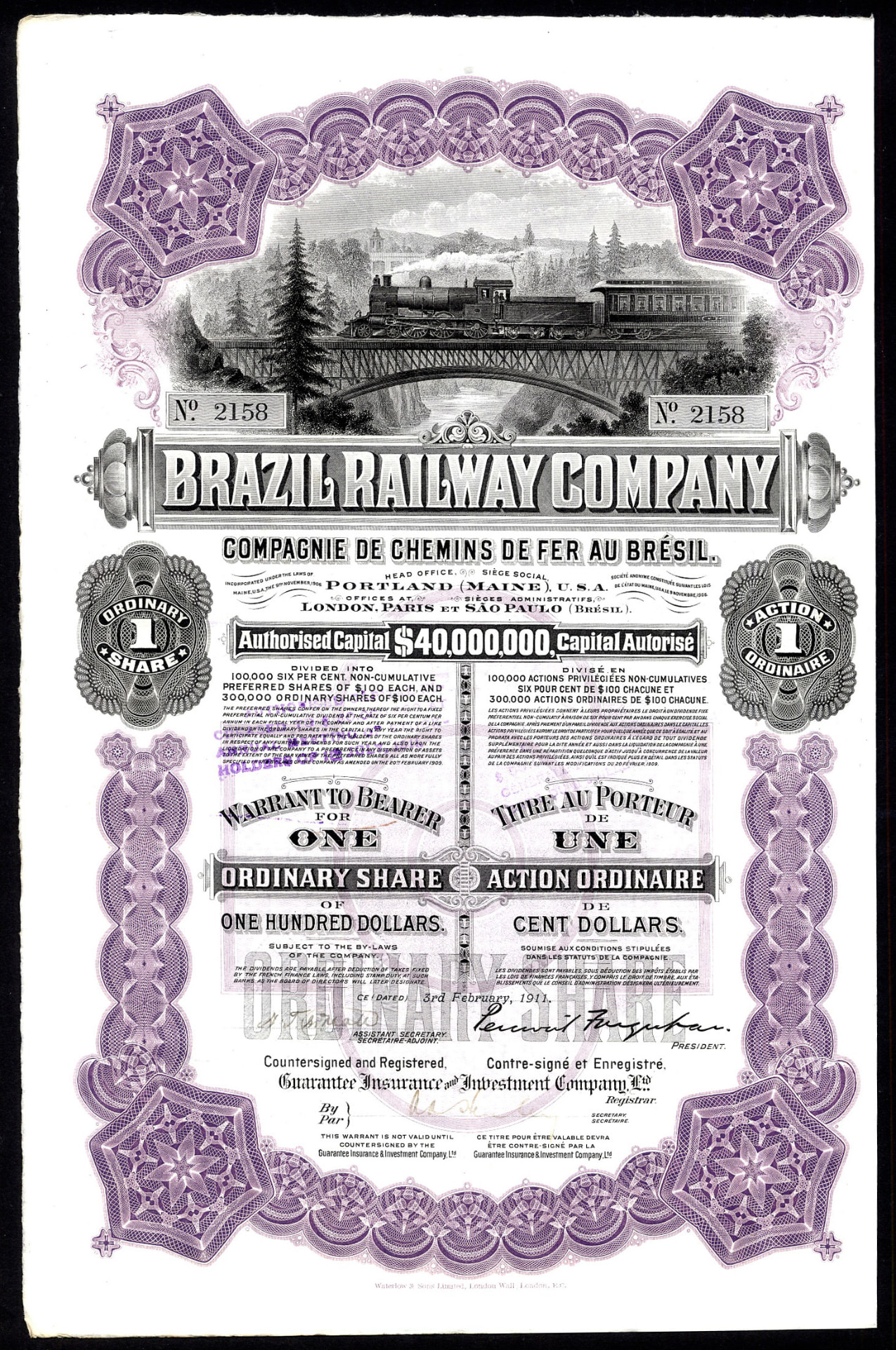
The engraved picture shows what the company did: here a steam train crossing a bridge through Brazilian forest.
No. 2158, printed twice. Every certificate had its own number so the company could track it.
Brazil Railway Company, repeated in French as Compagnie de Chemins de Fer au Brésil, so the share could be sold in London and Paris.
Incorporated under the laws of Maine, USA, on 9 November 1906, with its head office in Portland.
Offices in London, Paris and São Paulo show an American company raising European money to build in Brazil.
$40,000,000: the total amount the company was allowed to raise by issuing shares.
Divided into 100,000 six per cent non-cumulative preferred shares and 300,000 ordinary shares, all of $100 each.
The roundels on each side say this certificate represents one share.
Warrant to Bearer: whoever physically held the paper owned the share. No name was registered, so it could change hands like cash.
One ordinary share of one hundred dollars. Ordinary shareholders were paid only after the preferred shareholders.
Dated 3rd February 1911, a few years before the company collapsed in 1914 under its debts.
Signed by the assistant secretary and by the president, Percival Farquhar, the American promoter behind the venture.
Countersigned by the Guarantee Insurance and Investment Company. The warrant was not valid until this was done.
Waterlow & Sons Limited, London. Fine engraving by security printers made forgery difficult.
Scripophily today
Scripophily, from the English "scrip" and the Greek "philos", is the collecting of historical share certificates and bonds. Collectors look for rare issuers, famous signatures, fine engraving and the stories of booms and busts behind each document.
ScripoTime is the global marketplace and community for scripophily: buy and sell certificates, catalogue your collection and talk with collectors around the world.
Join the community on ScripoTimeScripoTime is the Institute's partner platform for collectors and was founded by the same team. We feature it because we believe original certificates are one of the best ways to engage with financial history.