
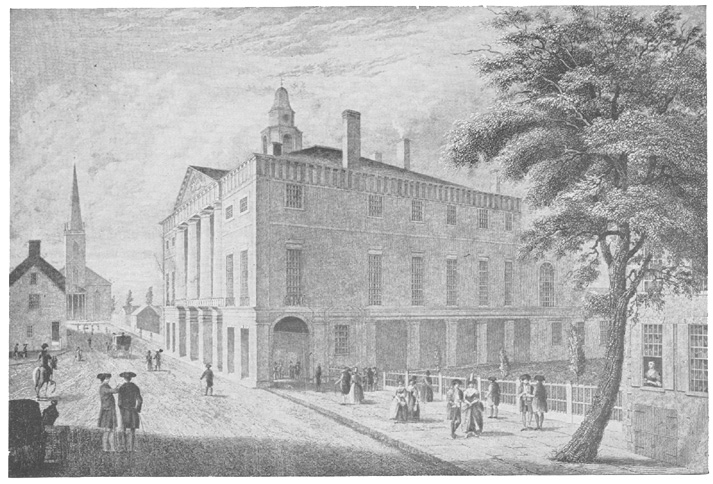
Why has America become the "land of opportunity" for so many? Why has America, in just a relatively few short years of its existence, become the global economic engine delivering so much prosperity to so many? Indeed, civilizations that have existed for thousands of years still have not come close to delivering a quality lifestyle to their people as has the United States and the western world. The answer to these questions is, to a large degree, rooted in our capital markets.
For this, we must credit our political and financial forefathers in America — bold individuals who held a dream for the future: a free nation with a strong political and financial system which would allow all to pursue their dreams free from persecution. While there were many astute and forward-thinking Americans of the day with an interest in building a free-flowing capital market, a true personification of this ideal is most certainly Alexander Hamilton. While Hamilton believed in a strong central government, he also understood the necessity for the development of a healthy capital market providing a strong incentive for those who would risk their hard-won capital.
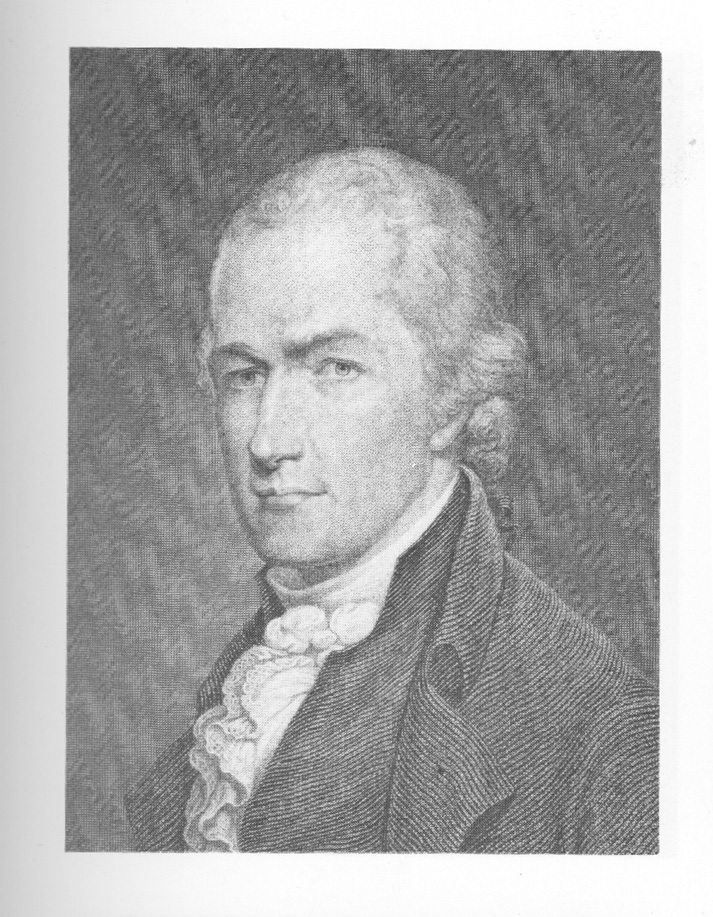
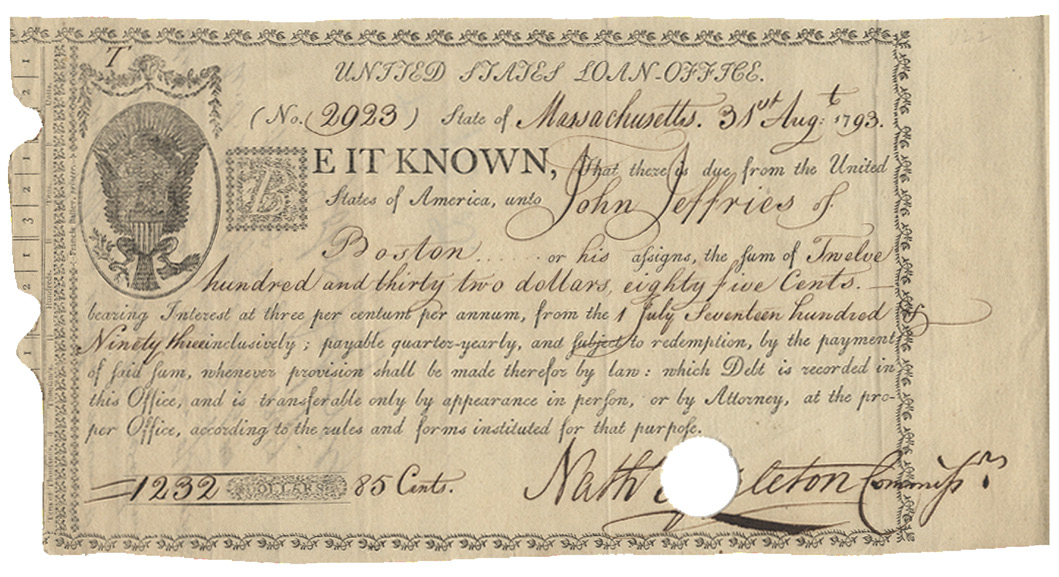
As America's first Treasury Secretary under Washington, Hamilton put forth a plan to refinance the young nation's staggering debt remaining from the Revolutionary War. In 1790, some of the earliest securities to be publicly traded in the United States were those United States stock issues created to refinance both the federal and state debts accruing from the conflict. Additionally, the formation of the first Bank of the United States offered investors what was, essentially then, the only other publicly traded security at the time. Indeed, Hamilton's plan put forth in 1791 for The Society for Establishing Useful Manufactures was one of America's first attempts at attracting the general public to invest in private enterprise, providing it with permanent capital, the shares of which could then be publicly traded. His vision for this concept fostered a new attitude throughout the young nation in terms of public investment in private enterprise.
The Buttonwood Agreement
Many felt the early speculators in United States Stock, S.U.M. shares and other early financial instruments were inherently dangerous to the nation's financial stability. Indeed, the actions of these "nerves of steel" traders through financial panics in the early stages of the market's development set the stage for the growth and development of the public's investment into an ever-growing variety of securities in the companies which would prove to be the springboard of our nation's economy.
To the traders in these early securities, it became almost immediately apparent that an organized format for trading was necessary for an efficient market to provide stability and confidence in these new-fangled forms of investment. To this end, a hearty group of securities dealers and auctioneers formed an alliance near city hall under the buttonwood tree, trading some of America's earliest securities in an organized fashion. Named for the tree under which these informal trading sessions took place, this alliance of an original group of 24 brokers banded together to sign the "Buttonwood Agreement" in 1792.
The far-reaching importance of this agreement — a simple two-sentence contract intended to formalize a trading market and provide an efficient organ for trading securities — could hardly have been realized by these pioneer brokers. A prescribed trading period and commission structure were established, the rules to be strictly followed by its members, who, while working to organize the trading market, agreed to provide preferential treatment to their members. Thus, the beginnings of what we now know as today's New York Stock Exchange had taken root.
The Tontine Coffee House
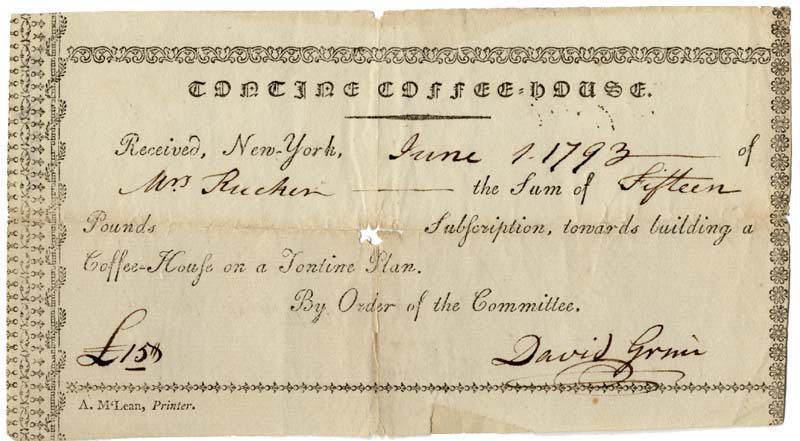
Lacking a formal location for their trading activities, these early traders and merchants of New York began construction of the Tontine Coffee House in 1792, dedicating it the following year as their exchange. In 1817, the roots of this pioneer band of traders would be formed as the New York Stock and Exchange Board, its name being changed to the New York Stock Exchange in 1863. Thus, the Tontine Coffee House served as America's first formal building for stock exchange in America.
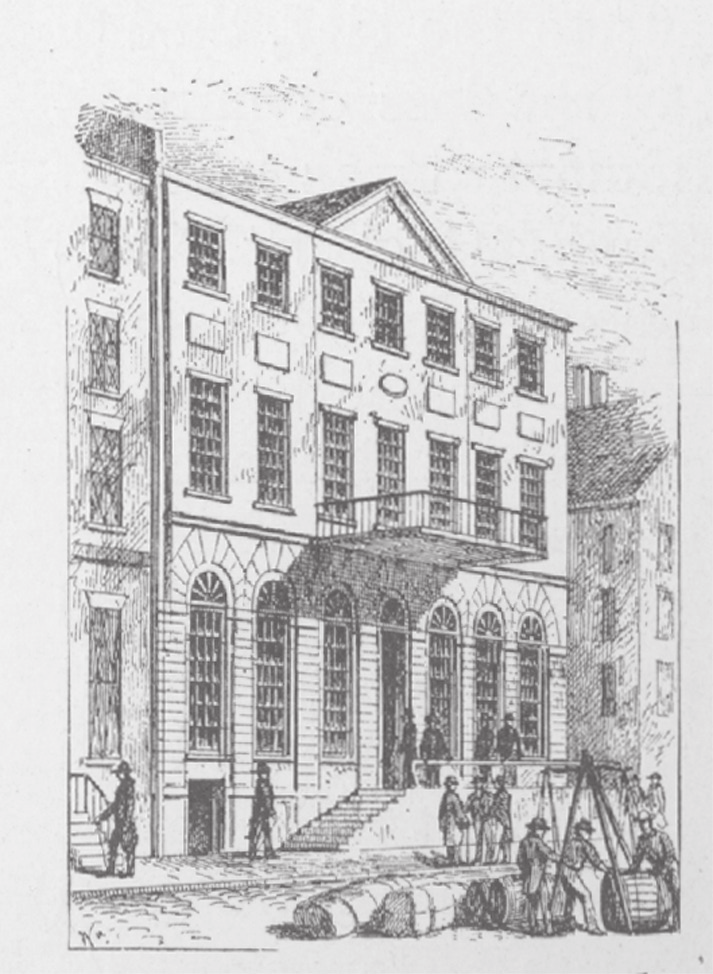
Nearby these historic sites of America's early securities trading center stands Trinity Church — the burial place of Alexander Hamilton. It is striking that his will and dreams for a strong American financial system could not be shattered by those that would strike at the heart of America and our financial system. Indeed, the years following the tragedy of September 11, 2001 have shown how resilient free people around the world can be during difficult times. While our financial markets had temporarily suffered a setback, history has shown our financial markets have only become stronger and more efficient with the passage of time.
The man who is a bear on the future of the U.S. will go broke.
J. Pierpont Morgan, 1895
Yes, we have seen the excesses of free capital markets, perhaps best exemplified by the dot-com phenomenon. But our history has shown us time and again — railroad speculation in the 1850s, utilities in the 1890s — that these excesses are ultimately a natural by-product of our freedom, and signify the hope and confidence in our economic future. Ultimately, economic development is synonymous with peace, prosperity and freedom — and economic development is best achieved through the strength of our free capital markets. History has proven this.
Join the discussion
Financial History Institute Editorial invitation
What do you think? Share your perspective, questions or historical insights below. We welcome a thoughtful discussion.
Comments are reviewed before appearing. Your name and comment will be public once approved.