
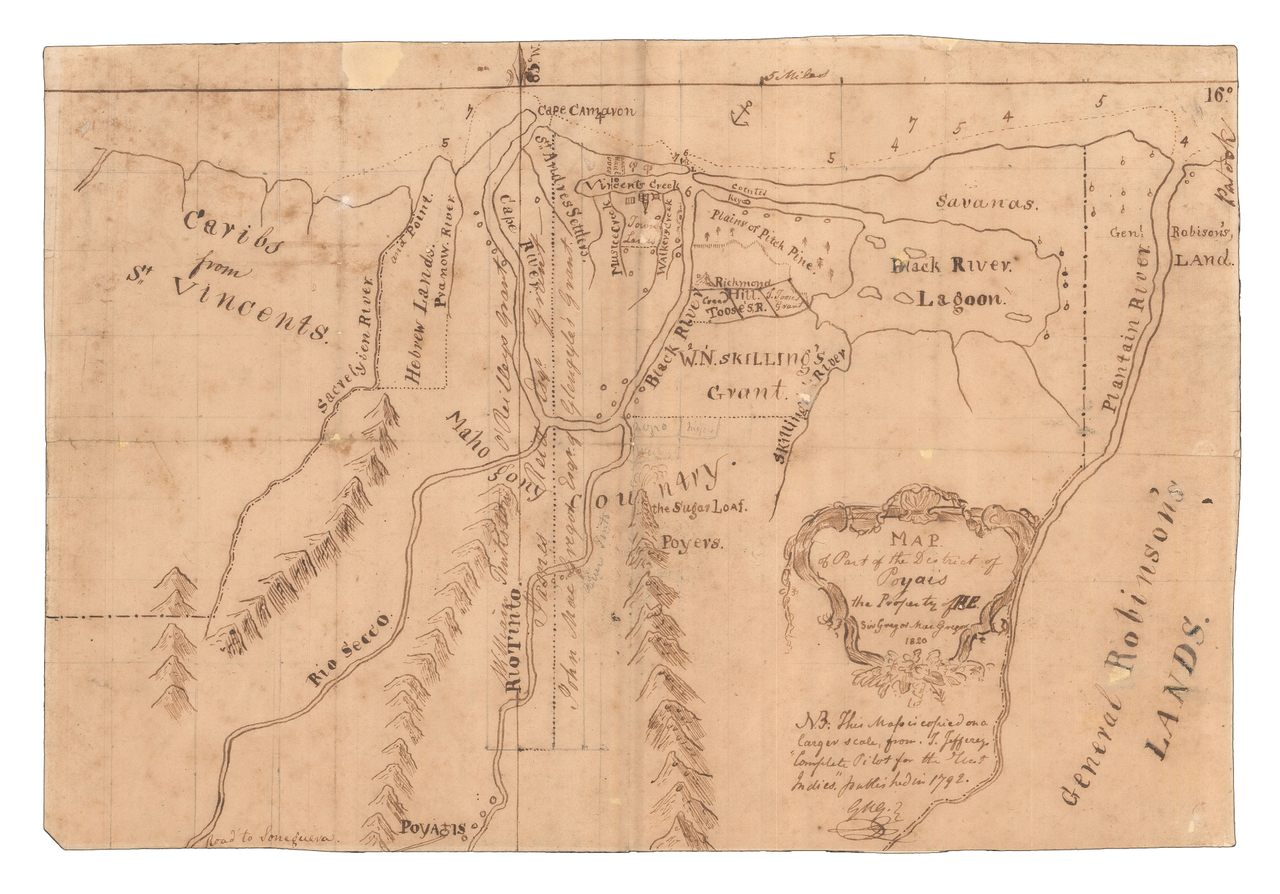
In 1821–1823, Gregor MacGregor, a Scottish soldier and adventurer, invented a fictional Central American country called Poyais, located roughly on the Mosquito Coast of modern Honduras and Nicaragua, and used it to defraud investors on a massive scale. The territory he claimed to govern was larger than Wales.
His pitch centred on natural abundance paired with underdevelopment: he presented Poyais as a resource-rich land simply awaiting capital and settlers to unlock its potential, framing it as a uniquely attractive opportunity for investors rather than a speculative gamble.
MacGregor’s fraud operated on two fronts simultaneously. The first was sovereign debt: he issued and sold Poyaisian government bonds, raising funds through London’s capital markets, and convinced banks, retail investors, and the financial press of the scheme’s legitimacy. The second was emigration: he went further than most bond frauds by recruiting actual settlers to emigrate to Poyais, which meant the fraud carried a human cost beyond pure financial loss.
The fraud is estimated at around $5 billion in today’s money. Despite its scale, MacGregor was never meaningfully convicted. For a financial history audience, the Poyais case is often cited as an early example of sovereign debt fraud enabled by weak disclosure norms and the London market’s appetite for exotic, high-yield paper during the post-Napoleonic bond boom.
Let us now take a step back and start from the beginning of the story.
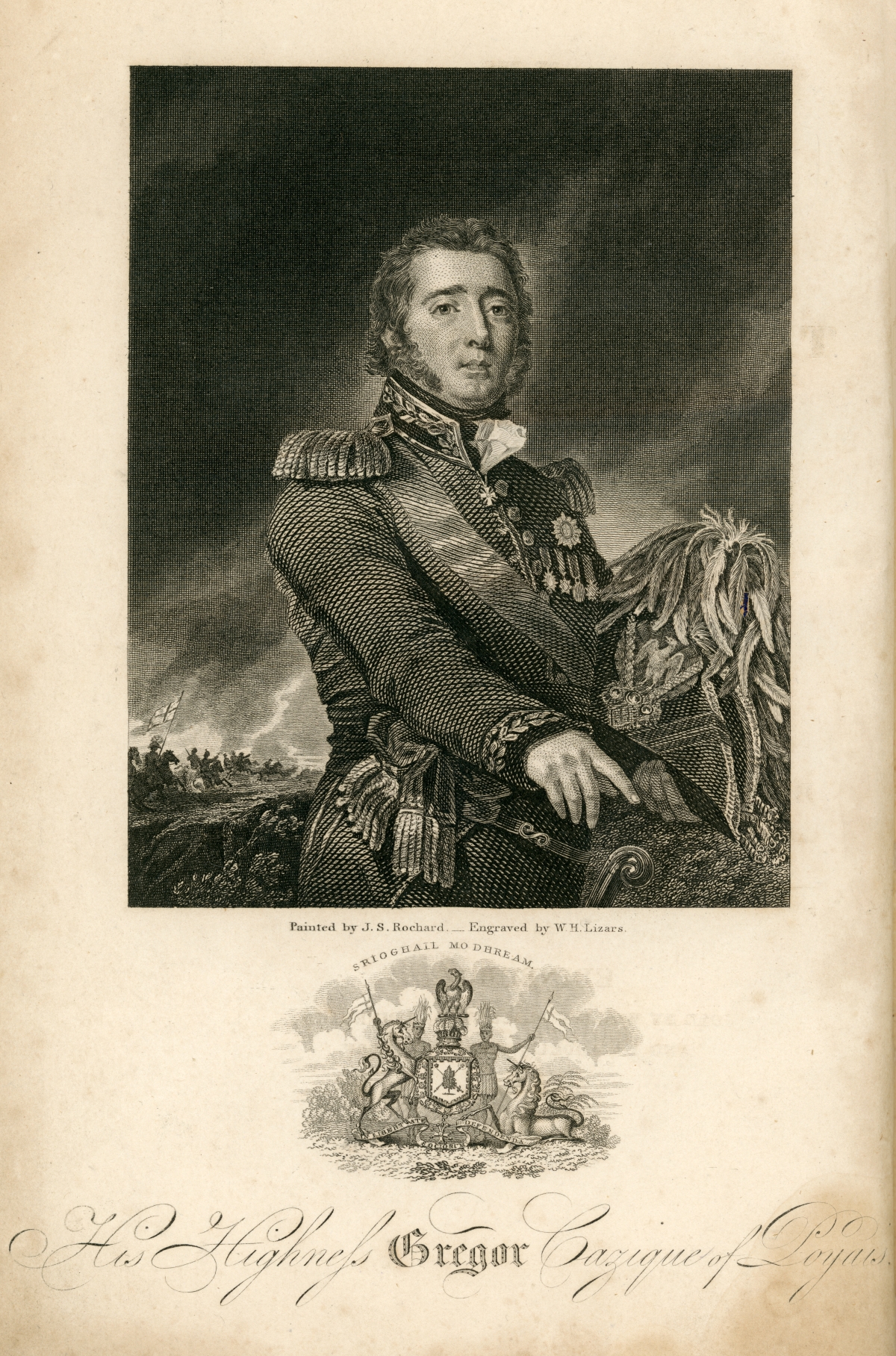
MacGregor was born on Christmas Eve 1786, the son of an East India Company sea captain. He joined the British Army at the age of 16, the youngest age then permitted, his family having purchased him a commission. He rose to the rank of captain shortly afterward. It was also at this time that he developed a fascination with uniforms, ranks, and military decorations. On his return to Edinburgh, he began using the title of colonel, which he did not hold, and claiming distinctions supposedly conferred by foreign countries.
Eager to go further, MacGregor moved to London, where he adopted the title of Lord and began to dream of exploring Latin America. Following the death of his first wife, he travelled to Venezuela. He remarried in 1812 and joined the cavalry under the revolutionary leadership there. MacGregor then fought alongside Simón Bolívar and achieved his first military successes in 1817.
He travelled to the United States and ran his first fundraising effort, raising the equivalent of $4 million in today’s money to finance the conquest of Florida, which was then still a Spanish colony. The capture of Amelia Island that followed was easily won: the Spanish commander guarding it overestimated the size of MacGregor’s force and surrendered immediately. But it did not amount to a lasting accomplishment. Rather than defend what he had taken, MacGregor handed command to a subordinate and fled to the Bahamas as soon as Spanish forces began massing on the mainland opposite the island.
A pattern began to emerge in which MacGregor would proclaim victory, commission objects and honours to commemorate his successes, and then withdraw and concede ground to Spanish forces. Eventually the tide turned against him, and the president of Colombia ordered his arrest and execution should he set foot on the continent again. One might expect the story to end here, but this was in fact only the beginning of what would become the Poyais scam.
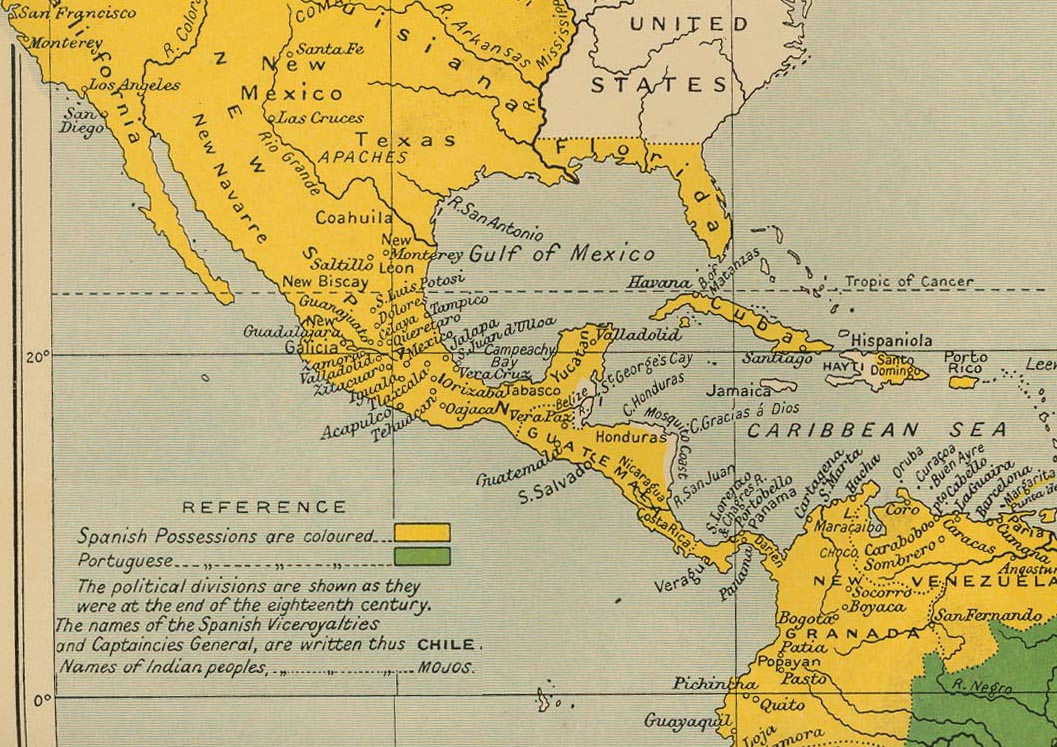
After a short disappearance from public view, MacGregor resurfaced at the court of King George Frederic Augustus, known as the Mosquito King, in a British protectorate on the border between present-day Nicaragua and Honduras. In exchange for rum and jewellery, MacGregor acquired 12,500 square miles of territory and returned to London under the title of Cazique of Poyais, which he explained was the equivalent of a prince. It was at this time that MacGregor attended the coronation of King George IV, claiming to represent the nation of Poyais.
It is worth bearing in mind that access to information at the time was far more restricted than it is today, and that Latin America was a continent on which many governments rose and fell in quick succession. The broader investment climate was, on the whole, favourable to MacGregor’s scheme: the British economy was booming, inflation was very low, and wages were rising. With interest rates falling, investors in British government bonds, known as consols, could expect a yield of only 3 percent.
Investors turned to other sovereign bonds, from Russia, Prussia, and Denmark, in search of higher yields, and increasingly to equities in foreign territories. One region that remained particularly attractive, especially after the collapse of the Spanish Empire, was Latin America. Many investors were drawn to new issuances from Brazil, Colombia, Mexico, and Guatemala, which yielded roughly twice the rate of the British consol.
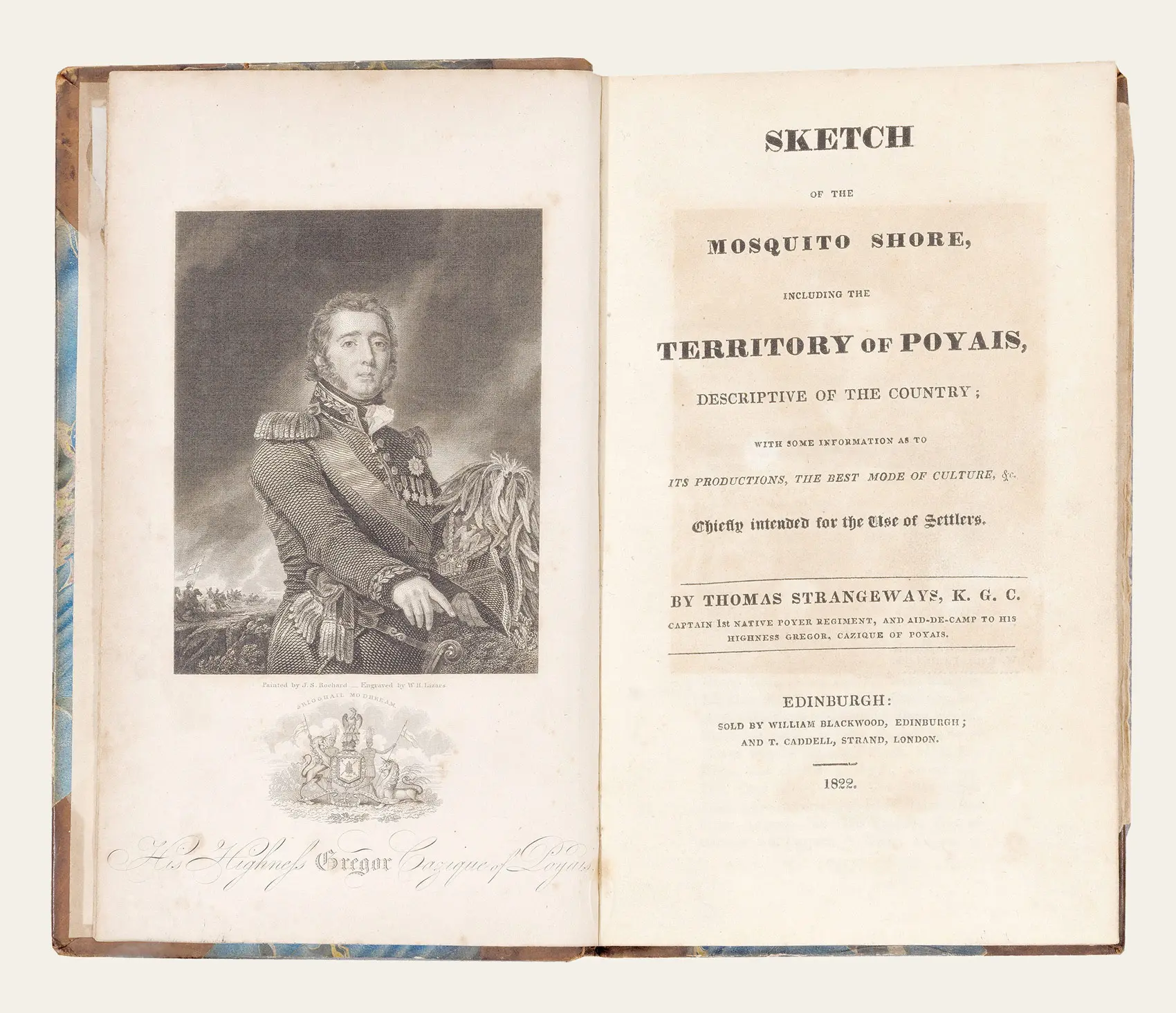
MacGregor also undertook something of a media campaign, publishing a book of more than 300 pages describing the fertility of the soil, the ideal climate, and the warmth with which the local population welcomed foreigners. He went so far as to claim that neighbouring regions already had well-developed institutions, including banks, cathedrals, and theatres, and that local rivers were filled with precious metals such as gold.
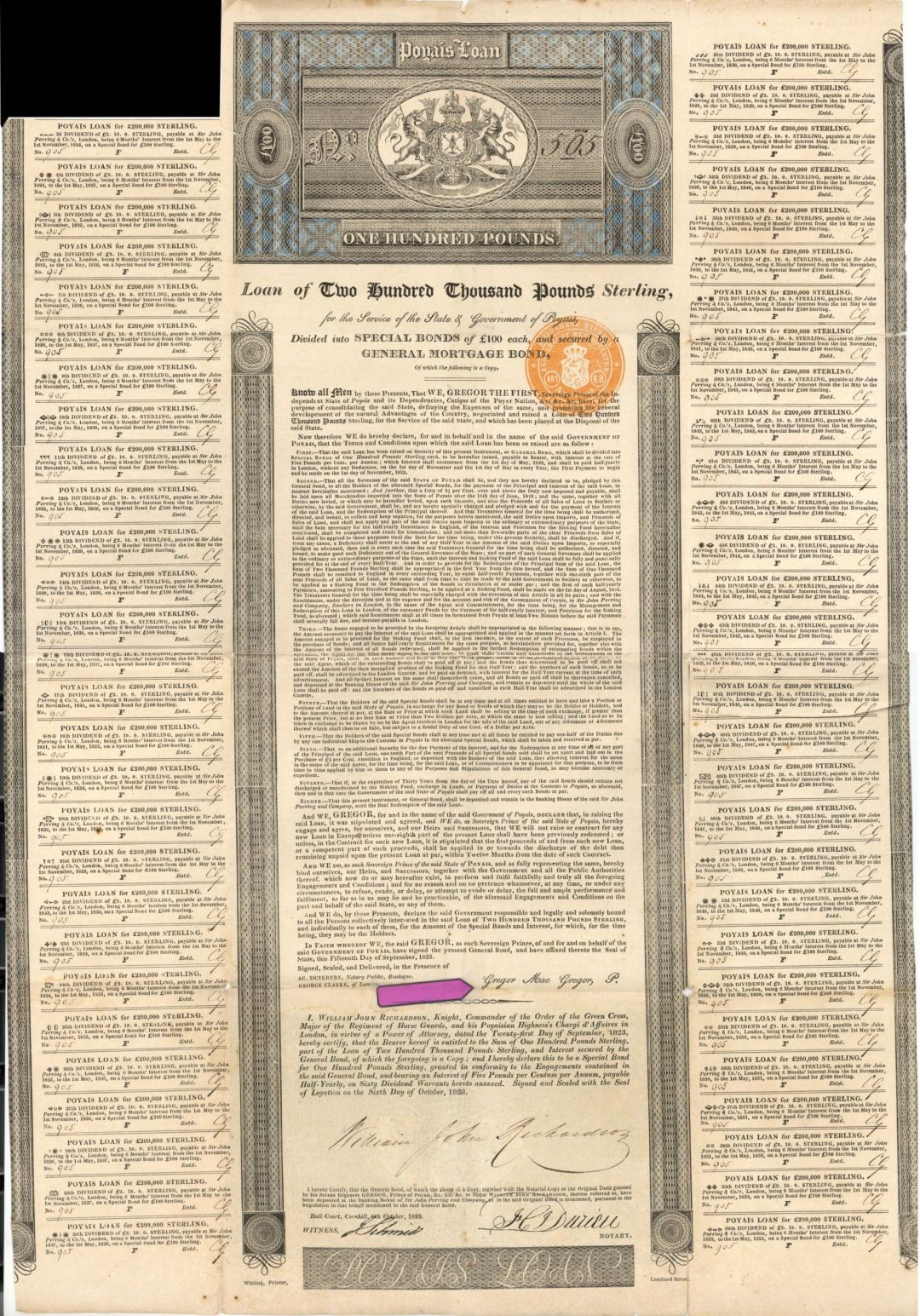
It was at this point that MacGregor began selling land certificates as well as Poyais bonds at a yield of 6 percent. Notably, while he raised capital in London, he returned to Scotland to recruit the settlers who would purchase land and move to the country, and from there shipped hundreds of them to the fictitious land.
Two ships left Scotland in 1822. Before boarding, the settlers exchanged their British pounds for the fictional Poyais currency MacGregor had invented. After a two-month voyage, during which MacGregor was, of course, not present, they discovered that the land bore no resemblance to what they had been promised in the newspapers, books, and other material MacGregor had published. The settlers ultimately uncovered the fraud upon meeting the Mosquito King himself, who revoked the land grant he had given MacGregor and denied the legitimacy of any title MacGregor had used in Britain.
Around 180 settlers died from illness and malnutrition over the course of the journey. Some chose to remain, while others were eventually sent back to Scotland.
While the settlers were away, Latin American governments that had issued debt came under increasing investor scrutiny. Panic spread from Colombian bonds to Peruvian bonds and finally to Poyais, causing the price of Poyais bonds to fall by 16 percent.
Sensing that the fraud would soon be exposed, MacGregor used the pretext of a trip to Italy to travel instead to Paris. Surprisingly, the settlers directed their anger at Hector Hall, a former British army officer who had actually led the expedition, allowing MacGregor to escape reputational damage at this stage.
While in Paris, MacGregor continued to recruit new settlers, but French authorities eventually grew suspicious when settlers began requesting passports for a destination that did not appear in their registry. MacGregor was not alone in Paris, and some of his associates were quick-witted enough to flee with documents that might have incriminated him. In court, MacGregor was released for lack of evidence and returned to London a free man.
In 1826 he attempted a further bond issuance, this time without success. By then his reputation was irreparably damaged, investor appetite for Latin American debt had faded, and scrutiny of such schemes had only increased. The issue failed.
After a short period back in Scotland, he emigrated once again, this time to Venezuela in 1838, where he rejoined the army and used his earlier military record to present himself as a war hero. MacGregor died in 1845 at the age of 58 and was given a full military funeral. He is buried in a cathedral in Caracas.
Stepping back, what stands out most in this story is how MacGregor managed to survive, reputationally and legally, at each stage of his career. A combination of factors, including strong demand among British investors starved of opportunity at home, together with genuine signs of economic development in Latin America, proved just enough for the Poyais scam to succeed.
Finally, for those interested in this story, some of the bonds MacGregor issued are still collected today by financial history enthusiasts and can be seen on ScripoTime.com, an online community for financial certificate collectors.


